Increasing Press Hardening Capacity Through Accelerated Infrasound Cooling

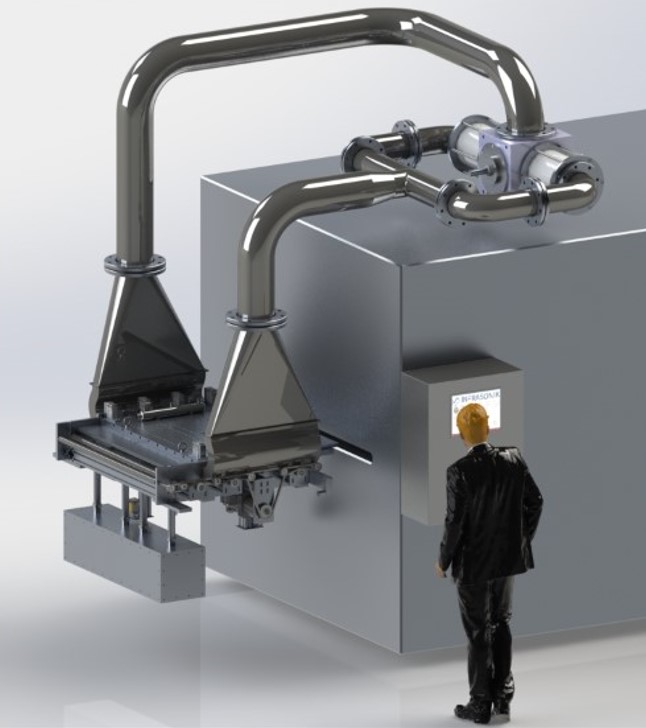
Together with the R&D team at Gestamp hardtech, Infrasonik developed a completely new cooling process for a press hardening process
Case Study Image

Client

Gestamp Hardtech

Industry

Automotive Components Manufacturing

Location

Luleå, Sweden

Engagement Duration

12 months

In press hardening, steel blanks are heated in a furnace to approximately 900–950°C before being transferred to a forming press, where rapid cooling determines the final material properties.

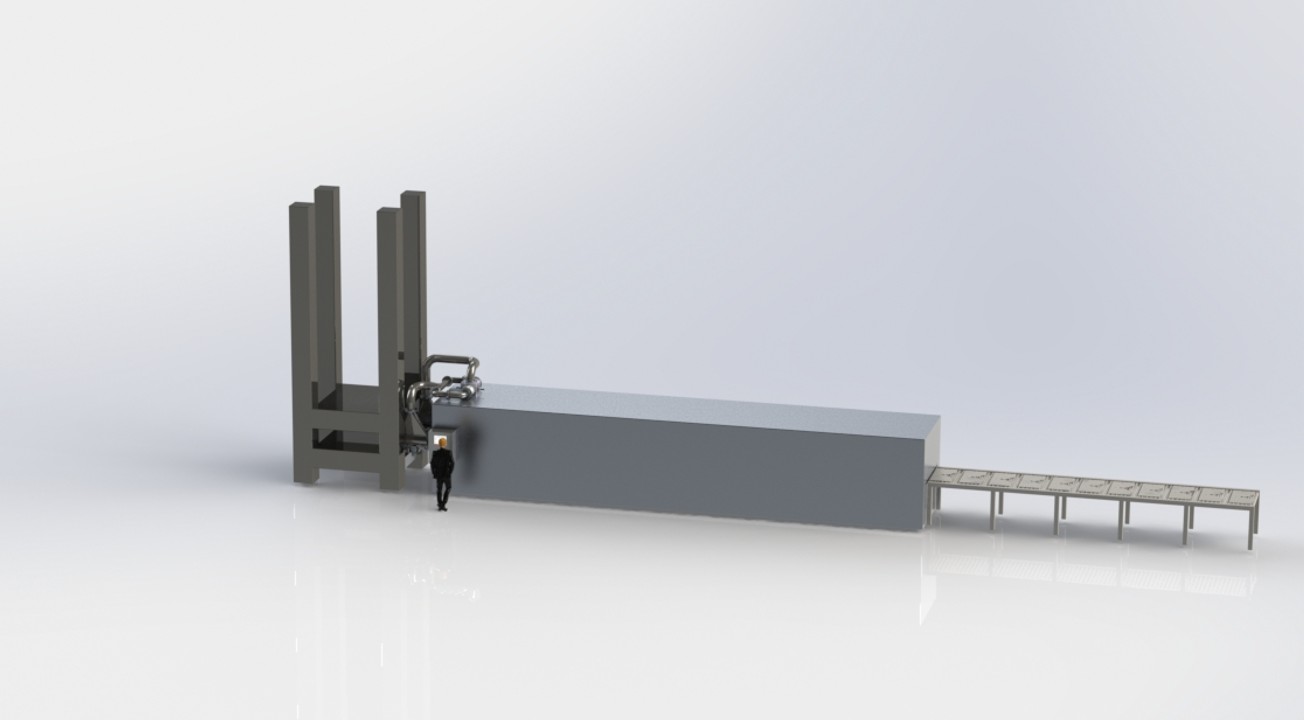
The transfer distance between furnace and press is typically short — in this case approximately one meter — but the thermal conditions during this short transport phase are critical.

Gestamp HardTech identified an opportunity:
If the temperature of the blank could be reduced in this transfer zone before entering the press, they could:

  • Increase production capacity
  • Reduce thermal load on the press tools
  • Improve tool lifetime
  • Maintain uniform mechanical properties

To explore a new approach, Gestamp partnered with Infrasonik.

No items found.

Challenges

The cooling window between furnace and press is extremely limited in both time and space. Conventional airflow systems struggle to generate sufficient and uniform heat transfer within such a compact section of the line.

Key requirements included:

  • Significant temperature reduction within ~1 meter
  • No mechanical interference with the line
  • Uniform cooling across the entire blank surface
  • No negative impact on material properties

The solution had to fit seamlessly into an already optimized high-speed production environment.
The Test Phase

Infrasonik implemented high-intensity infrasound to actively enhance convective heat transfer in the transfer zone.

By generating particle velocities of up to 75 m/s, the infrasonic system intensified gas movement at the material surface, disrupting the thermal boundary layer and accelerating heat removal — without increasing mechanical airflow or adding complex moving components.

Unlike conventional air systems, the infrasonic field created:

  • Strong and uniform gas movement
  • Enhanced heat extraction within a compact space
  • Even cooling across the blank surface

This resulted in the development of a completely new cooling concept integrated into the transfer stage of the press hardening process.

No items found.

Results

The collaboration demonstrated that infrasonic cooling in the transfer zone could:

  • Reduce blank temperature before entering the press
  • Lower thermal stress on press tools
  • Improve cooling uniformity
  • Support increased production capacity
  • Contribute to extended tool lifetime

Even cooling was a particularly important outcome, as temperature gradients can affect final material properties and process stability.


Business impact

5-10%

Effective line capacity

20%

Longer tool life
Testimonial Image

-

R&D Director

Other case studies

Partner with us to build the future of your process

We bring hands-on innovation experience and tech expertise to every engagement.

Let’s Talk Innovation
Icon
Icon
Expert Support
Icon
Fast Onboarding
Icon
Real-Time Insights
Icon
Scalable Frameworks
DecorationDecoration
Webflow Icon
More Templates